Silver Birch Tree


Everything you need to know about the silver birch tree, from identification tips to typical characteristics; how to spot disease and the best way to maintain a silver birch tree.

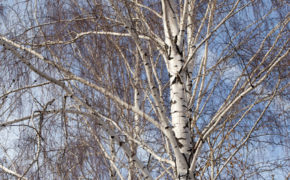
The silver birch tree is native to the UK. It can reach 30 metres in height in maturity and has a light canopy with characteristic cascading branches. This tree is widely used to boost soil quality so that other plants can grow healthily and it does this courtesy of it deep roots that draw in otherwise inaccessible nutrients, recycling them into the soil as the leaves are shed.

General Facts

Known as Silver birch, bed wen
Latin name Betula pendula
Location UK native, Western Eurasia
Foliage Deciduous
Lifespan 150 years

Characteristics

Height Up to 30 metres
Spread 8 metres plus
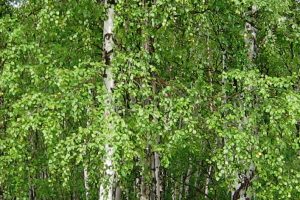
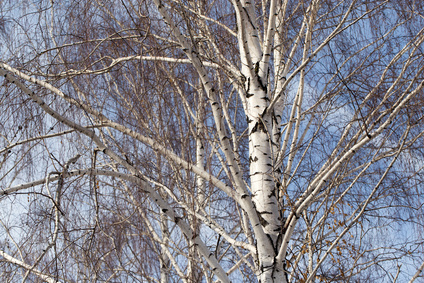
Appearance An elegant looking tree with characteristic cascading branches. The bark is silvery white and sheds in layers, becoming rugged and dark at the base of the trunk. A more mature silver birch will display bark with dark, diamond shaped fissures. The twigs are smooth with small, dark warts but become rough to the touch in winter.
Leaves Leaves are light green in colour in spring, fading to yellow in autumn. They are small in size and triangular shaped with a toothed edge.
Flowers Both the male and female flowers of the silver birch appear on the same tree. They take on the form of catkins and bloom from April to May. The male version is long and yellowy brown, hanging in groups of two to four on the tips of the shoots and giving the appearance of lambs’ tails. The female flowers are bright green and much smaller.
Fruit The female catkins are wind pollinated and go on to transform to a thicker, dark crimson appearance. In the autumn a mass of miniscule seeds become airborne.
Found in Gardens, woodlands, downs and heath

Conditions

Ideal soil Moist but well drained, chalk, loam, clay or sand
Soil pH Neutral, acid alkaline
Aspect North, south, east or west facing
Exposure Full sun to partial shade; sheltered or exposed

Threats

Pests Sawflies, leaf-mining sawflies, aphids
Diseases Rust, leaf spot

Silver Birch Trees and Wildlife

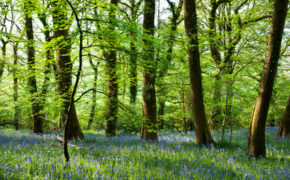
Because the silver birch has an open canopy, it offers the ideal environment for plant life to thrive beneath, so you will often find bluebells, violets, wood sorrel, grasses, mosses and wood anemone growing under a silver birch.

In excess of 300 species of insects consider the silver birch home and a rich source of food. Aphids are drawn to the leaves which means ladybirds follow and numerous moth caterpillars such as the angle-shade, buff tip, Kentish glory and pebble hook-tip will also feast on the foliage. The seeds are favourites for birds such as the greenfinch, redpoll and siskin.

The trunk of the silver birch is much loved by woodpeckers and other hole-nesting birds.

Silver Birch Tree Symbolism and History

Birch is an important tree in folklore and mythology. The Celts considered it a symbol of renewal and purification and Scottish Highlanders would use a birch stick to herd a barren cow in order to make it fertile, or a pregnant cow so that it would bear a healthy calf.

To this day, gardeners use a birch broom to purify their gardens.

The word birch is thought to have come from the Sanskrit bhurga which means a ‘tree whose bark is used to write upon’. The poet S.T. Coleridge named it the ‘Lady of the Woods’ and it is believed that the birch forms numerous English place names including Berkhamstead and Birkenhead.

The Importance of Silver Birch Trees

The timber of the silver birch tree is heavy and robust which means it works well in furniture making and is also widely used for toy making, although it is not widely used in the UK as the trees do not grow as extensively as they do in other areas of Europe.

The bark is used for tanning leather.

Caring for a Silver Birch Tree

The silver birch tree is a low maintenance tree and doesn’t need much other than light pruning. All that really needs to be done is to remove any dead or diseased branches or any that are congested or rubbing together and preventing air flow or light penetration.

It is also good practice to remove branches that are sitting close to the ground as this will make landscaping more straightforward and allow the tree to be enjoyed as a shady haven.

When pruning or generally taking care of a silver birch tree, there are certain things to look out for. These include orange, yellow, brown, black or white pustules on leaves (leaf rust) and the dying off of branches within the crown (birch dieback).

A qualified tree surgeon will know precisely how and when to prune a silver birch tree for best results and they will also be aware of how to detect the common diseases that this tree is prone to, identifying them early on and treating them correctly so as to give the tree the best possible chance of survival.

If you have a silver birch tree that could do with some knowledgeable care and attention, why not get in touch with Tree Works? As fully qualified and highly experienced tree surgeons, we can offer detailed knowledge and skill across all aspects of tree care. For a free, no-obligation quotation, call us on 07781 416 354 or get in touch here.
Holly Tree


Everything you need to know about the holly tree, from identification tips to typical characteristics; how to spot disease and the best way to maintain a holly tree.

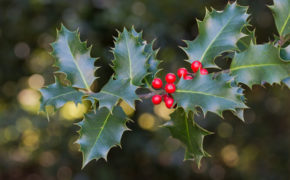
The holly tree is of course synonymous with Christmas but some might be surprised as its ability to grow up to 15 metres in height and its longevity of some 300 years. Its prickly leaves and bright red berries are the holly tree’s key characteristics.

There are numerous varieties of holly tree, including the Silver Milkmaid, the hedgehog holly, amber holly with its notable orange berries, Alaska holly and common holly.

General Facts

Known as Holly, common holly, English holly
Latin name Ilex aquifolium
Location Europe, North Africa, South and West Asia
Foliage Evergreen
Lifespan 300 years

Characteristics

Height Up to 15 metres
Spread 4-8 metres
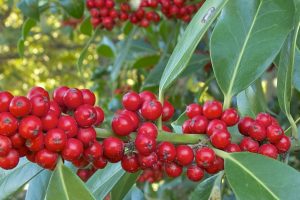
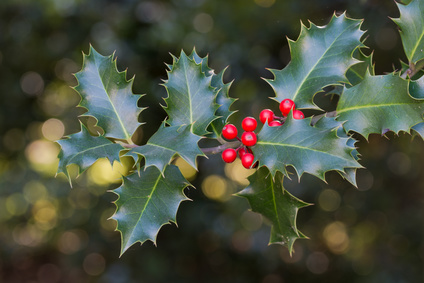
Appearance A mid-range sized evergreen tree that grows slowly during its younger phase. The dark, glossy, prickly leaves are its redeeming feature as are the red berries that appear in pollinated female plants and last throughout the winter, giving the holly tree its Christmas feel.
Leaves Leaves are deep green, glossy and spiky when young, transforming to a more rounded and smooth appearance in later years and in higher parts of the tree.
Flowers The flowers of the holly tree are split with male on one tree and female on another. All flowers are white with four petals.
Fruit Bright red berries appear once the flowers are pollinated by insects and these stay on the trees throughout the winter giving that typical winter and Christmas appeal.
Found in A very popular ornamental shrub, holly is often found in gardens and parks and it is usual to see various different forms of holly bearing different colours of berries and leaves. Also commonly found in scrub, hedgerows and oak and beech woodland.

Conditions

Ideal soil Moist but well drained, chalk, loam, clay or sand
Soil pH Neutral, acid, alkaline
Aspect North, south, east or west facing
Exposure Full sun to partial shade; sheltered or exposed

Threats

Pests Aphids, scale, holly leaf miner
Diseases Holly leaf blight

Holly Trees and Wildlife

Thanks to the dense and protected cover it provides, the holly tree offers excellent nesting opportunities for birds. The leaf litter is an excellent environment for hedgehogs and small mammals seeking a hibernation haven.

Holly flowers are enjoyed by bees and other pollinating insects for their nectar, and the leaves are a favourite of the holly blue butterfly caterpillar as well as those of numerous moths such as the holly tortrix, the double-striped pug and the yellow barred brindle. Deer also flock to the smooth leaves at the tops of the trees during the winter as they provide a rich food source.

Holly berries are a vital winter food source for birds, wood mice and dormice.

Holly Tree Symbolism and History

The holly tree is a highly popular symbol of Christmas with branches commonly used to form part of the decorations, often used for hearths and wreathes.

Holly was also considered a fertility symbol and a charm to protect against goblins and witches.

The Importance of Holly Trees

The timber of the holly tree is extremely pale in colour and perhaps the lightest of all woods. It is fine grained and robust and widely used in furniture making where it is stained and polished.

Walking sticks are often made of holly wood, and as it burns with a strong heat, it also makes very good firewood.

Caring for a Holly Tree

The holly tree is a low maintenance tree and does not call for much in the way of pruning other than a light intervention. Simply taking out any dead or diseased branches or pruning away congested shoots will help to boost the health of the tree by increasing air flow and light penetration.

When pruning a holly tree, there are certain things to look out for, holly leaf blight being one of the most important. This can be detected by black or purple blotches on leaves and dieback of stems. The holly leaf miner also causes leaf blotching which is often mistaken for holly leaf blight, so it is best to get a tree surgeon in to take a look at the issue and make a diagnosis.

A qualified tree surgeon will know just how and when to prune a holly tree for the ultimate effects and they will also be completely knowledgeable as to how to detect the common diseases that the holly tree is prone to. Early identification is crucial so that the tree stands the best chance possible of remaining healthy.

If you have a holly tree that could do with some expert care and attention, why not get in touch with Tree Works? As fully qualified and highly experienced tree surgeons, we can offer exceptional knowledge and skill across all aspects of tree care. For a free, no-obligation quotation, call us on 07781 416 354 or get in touch here.
Hornbeam Tree


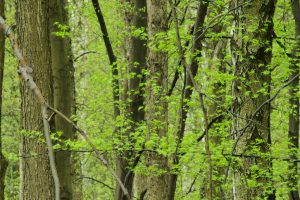
Everything you need to know about the hornbeam tree, from identification tips to typical characteristics; how to spot disease and the best way to maintain a hornbeam tree.

The hornbeam tree is a deciduous broadleaf tree that is native to southern areas of the United Kingdom, although you will find it planted across the country. Only two species of Hornbeam are prevalent in Europe, and the tree is commonly mistaken for the beech. The name is derived from the hardness of the timber, with ‘horn’ meaning hard, and ‘beam’ being the old English name for a tree.

A mature hornbeam tree can grow up to 30 metres in height and live over 300 years, especially with regular pollarding or coppicing.

General Facts

Known as Hornbeam, common hornbeam, European hornbeam
Latin name Carpinus betulus
Location UK native, Europe, Turkey
Foliage Deciduous
Lifespan Up to 300 years

Characteristics

Height Up to 30 metres
Spread 4-8 metres
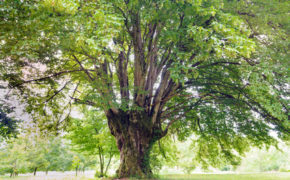
Appearance A large tree with a fluted grey trunk and attractive foliage. Twigs are grey-brown and slightly hairy.
Leaves Hornbeam leaves look similar to the characteristically pleated beech tree leaves. They are toothed and oval with pointed tips but are smaller – around 5-8cm long – and have deeper wrinkles than beech leaves. Leaf buds sit closely to the twigs. They are smaller than those of the beech tree and have a gentle curve at the tips. The leaves are green in summer and turn yellow in autumn.
Flowers Both male and female catkin style flowers grow on the same tree. The catkins open in spring then turn to hop-like fruiting catkins which grow to 8cm.
Fruit Once wind pollinated, the female catkins turns into green winged fruits called samaras which hang in clusters throughout autumn. The seeds are small nuts that grow to around 6mm.
Found in Oak woodland

Conditions

Ideal soil Moist but well drained, chalk, loam, clay or sand
Soil pH Acid, alkaline, neutral
Aspect North, south, east or west facing
Exposure Full sun to partial shade; sheltered or exposed

Threats

Pests Caterpillars, aphids
Diseases Powdery mildews, coral spot

Hornbeam Trees and Wildlife

As with the beech tree, the hornbeam will retain its leaves year-round if grown as hedging. This provides constant shelter for birds and small mammals, giving them the opportunity to roost, nest and forage for food.

Caterpillars of various species of moth are particularly partial to hornbeam leaves, and tits and finches enjoy the seeds when they fall in autumn, as do smaller mammals.

Hornbeam Tree Symbolism and History

Hornbeam leaves were historically used to heal wounds and halt bleeding, whilst a tonic made from the tree was used to treat tiredness and exhaustion.

These days hornbeam is used in the Bach Flower Remedies to help with concentration and mild depression as well as tiredness at the thought of doing something.

The Importance of Hornbeam Trees

Hornbeam wood is extremely hard. Its grain is very attractive, but the timber is difficult to work with which is why you won’t find it used in furniture making. Instead it is more widely used to make musical instruments as well as tool handles, butchers’ chopping boards and flooring.

Hornbeam wood burns very well, so is widely used as charcoal and firewood.

Caring for a Hornbeam Tree

The hornbeam tree is generally low maintenance and doesn’t call for much other than light pruning. Providing any dead or diseased branches are removed on a regular basis, and airflow is maximised by taking out any crossing or congested shoots, the hornbeam should pretty much take care of itself.

Coppicing or pollarding will increase the lifespan of the hornbeam tree and will encourage it to grow tall.

Be sure to carry out any non-emergency pruning during late summer or early autumn to avoid bleeding sap which can lead to diseases.

For hornbeam hedges, pruning is more important in order to maintain the shape and keep it looking nice and tidy. The hornbeam tends to have two growth spurts during the year, one being in the spring and the next in the summer. Trimming back after each growth spurt will help keep them tidy. Ensure the summer cut is carried out in September, before the leaves change colour and drop.

Pruning a deciduous hedge needs to be approached with care as leaves can easily turn brown if the trimming is too rough. Proceed carefully though and you will be able to enjoy an attractive and dense hedge.

Care should always be taken when pruning a hornbeam hedge

When you are caring for your hornbeam tree, be sure to look out for powdery mildews and coral spot. The mildew will show as a white, dusty coating on the flowers, stems and leaves. Coral spot will cause branch dieback followed by small, coral-pink fungal pustules.

A qualified tree surgeon will know exactly how and when to prune a hornbeam tree or hedge for the best possible results. They will also be well aware of how to detect the common diseases that the hornbeam tree is prone to. With early identification, they can be treated and have the best possible chance of survival.

If you have a hornbeam tree that could use some professional care, why not contact Tree Works? As fully qualified and highly experienced tree surgeons, we can offer detailed knowhow and expertise across all aspects of hornbeam tree care. For a free, no-obligation quotation, call us on 07781 416 354 or get in touch here.
Lime Tree


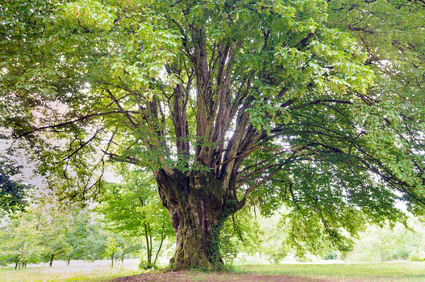
Everything you need to know about the common lime tree, from identification tips to typical characteristics; how to spot disease and the best way to maintain a lime tree.

The common lime tree is a deciduous broadleaf tree that is native to the United Kingdom and other parts of Europe.

There are various species of lime tree including hybrid species. A look at the underside of the lime tree leaf will reveal the true species. As for the common lime, tufts of white hairs will tell it apart from the small leaved lime which has rusty red hairs, and the large leaved lime which has hairs all over its underside rather than just tufts.

The common lime is a hybrid species of the small leaved and large leaved lime and tends to be grown ornamentally in the UK, although it can be found in the wild growing as a natural hybrid.

General Facts

Known as Common lime, European basswood
Latin name Tilia x europaea
Location UK native, Europe
Foliage Deciduous
Lifespan Up to 400 years

Characteristics

Height Up to 30 metres
Spread Up to 15 metres
Appearance A tall and often wide tree that shows characteristics of both the small leaved and the large leaved lime tree. Bark is pale grey-brown and erratically ridged. There are large burrs and abundant sucker shoots at the tree’s base, and the twigs are thin and brown, reddening in the sun.
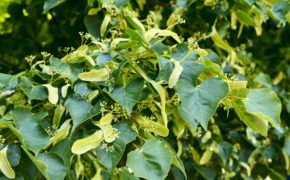
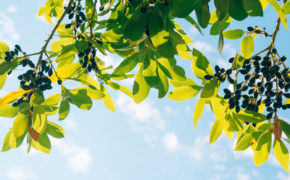
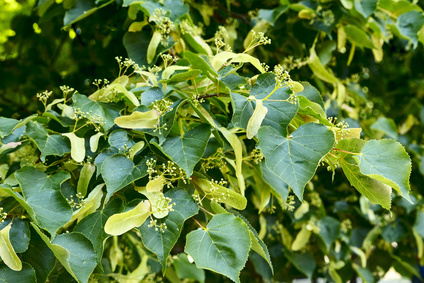
Leaves Common lime tree leaves are heart shaped and dark green turning to dull yellow before they fall in autumn. Leaves are flimsy and grow to around 6-10cm in length. The leaf base is lobed and somewhat lopsided, and the underside of the leaf displays tufts of white hairs, which is the main identifier for the hybrid species. The leaves start life on long stalks as small, red double-scaled buds that look at bit like a pair of boxing gloves.
Flowers Lime flowers contain both male and female parts. They are yellowy white with five petals and hang together in drooping clusters of 2 to 5.

Fruit After being pollinated by insects, the flowers transform into oval-round fruits with a pointed tip. These are not, as is widely believed, the citrus lime, which comes from a completely different plant.
Found in Residential and urban areas; estate gardens; formal gardens, partly shaded woodland.

Conditions

Ideal soil Moist but well drained, chalk, clay or sand
Soil pH Neutral, alkaline
Aspect North, south, east or west facing
Exposure Full sun to partial shade; Sheltered

Threats

Pests Aphids, gall mites, lime nail gall, sap-sucking insects
Diseases Fungal disease, bleeding cankers, wilt

Lime Trees and Wildlife

The leaves of the lime tree are a favourite of numerous species of moth. These include the lime hawk and the scare hook-tip. Aphids are also big fans, and hoverflies, ladybirds, bees and various species of birds flock to feed on the green flies. Lime flowers are a rich source of pollen and nectar for numerous insects, including bees.

The deadwood of the lime tree is a haven for wood-boring insects and provides excellent nesting opportunities for birds.

Lime Tree Symbolism and History

Lime trees have been linked to fertility throughout history and are a symbol of liberty in Switzerland and France where they were planted following different battles.

Lime blossom was used during times of war to make a soothing tea.

The Importance of Lime Trees

The close grained appearance and soft texture of lime tree timber makes is perfect for intricate carving and turnery as well as fine furniture making. In fact it was the timber of choice for Dutch wood carver Grinling Gibbons, who was commissioned to carve for high profile locations such as Blenheim Palace, Hampton Court and Chatsworth.

Lime bark was used to make rope and honey bees are very much attracted to lime flowers.

When coppiced, lime trees are often used for fuel and to make everything from cups and ladles to Morris dancing sticks.

Caring for a Lime Tree

Annual pruning is very important for the lime. It reduces the chance of disease by improving airflow, and it strengthens the limbs too. Pruning also allows more sunlight to penetrate, which is vital to maintain the health of a tree.

It is important to use the right type of sheers for lime pruning, and you must never prune a frost damaged lime tree until you can see new growth. Winter pruning is out of the question due to the frost sensitivity and should be avoided unless there is an immediate risk of falling branches. Removing larger branches can leave the bark exposed, and this could make the tree prone to sunburn.

It is clear to see that pruning a lime tree calls for expert knowledge, which means it is best to hand lime tree care over to a qualified tree surgeon if you really want your tree to enjoy the best possible health and maintain an attractive appearance.

Regular checks should be made of your lime tree. Look out for red or yellow tubular structures on the upper leaf surface which could denote lime nail gall. If you see a dark, sticky oozing fluid then this is likely to be bleeding cankers cause by fungal disease. You may also need to clear the tree of aphids which you can do by blasting with water. Of course, if you are particularly concerned about the health of your lime tree, you should not hesitate to consult with a suitably qualified tree surgeon.

If you have a lime tree that would benefit from professional attention, why not contact Tree Works? As fully qualified and highly experienced tree surgeons, we can offer detailed knowhow and expertise across all elements of lime tree care. For a free, no-obligation quotation, call us on 07781 416 354 or get in touch here.
Maple Tree


Everything you need to know about the maple tree, from identification tips to typical characteristics; how to spot disease and the best way to maintain a maple tree.

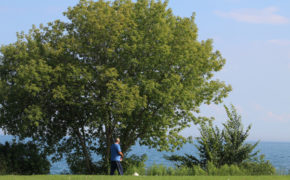
The field maple tree is the only species of maple native to the United Kingdom. It is a broadleaf deciduous tree that can grow up to 20 metres in height and live for up to 350 years. The sap of the maple tree is used to make maple syrup, and maple wood is one of the most common used in furniture making.

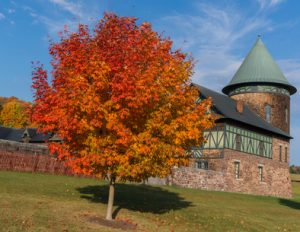
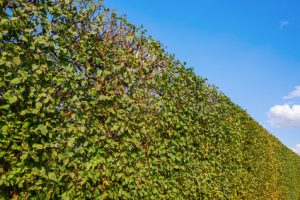
Maple trees are very popular hedgerow plants as they don’t drop their lives when regularly pruned. The kaleidoscopic colour spectrum of this tree is a real treat, transforming through rich reds and russets during the autumn. For this reason, and also because the maple tree has a great tolerance to pollution and a compact growing habit, you will often find them in parks and gardens.

Often confused with the sycamore tree, the maple can be identified best through its seeds, which have a wider angle than those of the sycamore.

General Facts

Known as Field maple, common elder
Latin name Acer campestre
Location UK native, Europe, West Asia
Foliage Deciduous
Lifespan Up to 350 years

Characteristics

Height Up to 20 metres
Spread 4-8 metres
Appearance A medium sized tree with a bushy crown that is fairly compact. Bark is light brown in colour and flaky in nature. The twigs are brown and thin, developing a cork-textured bark as they mature.
Leaves Small, grey leaf buds grow on long stems. The leaves are dark green and shiny, fairly small in size and distinctively five-lobed with rounded teeth. From green, the leaves transform through a spectrum of eye-catching colours, treating the onlooker to reds, russets and finally yellow before they finally fall in autumn.
Flowers Maple flowers have both male and female parts on the single flower, although they are dominated by one or the other. Flowers are green-yellow and small in size. They are cup-shaped and hang together in clusters.
Fruit Maple flowers are insect pollinated. Once this has happened, they develop into large, straight-winged fruits that are carried on the wind towards their potential new homes. New seeds are pink-tinged.
Found in Woodland, scrubland, hedgerows, chalk downland, parks and gardens.

Conditions

Ideal soil Moist but well drained, chalk, clay, loam or sand
Soil pH Neutral
Aspect North, south, east or west facing
Exposure Full sun to partial shade; Exposed

Threats

Pests Sycamore gall mite, aphids, horse chestnut scale
Diseases Verticillium wilt

Maple Trees and Wildlife

The field maple is much loved by aphids, which means in turn it also attracts those who enjoy feasting on aphids themselves, such as birds, hoverflies and ladybirds.

Caterpillars of various moth species enjoy the leaves. You’ll often see the sycamore moth, the maple pug, the small yellow wave, the mocha as well as the maple prominent and the prominent. Maple tree flowers provide a rich source of pollen and nectar for bees, and the fruits are a healthy food source for small mammals and birds.

Maple Tree Symbolism and History

Generally, the maple tree symbolises generosity, promise, balance and practicality and it is known as the tree of offering.

In certain areas of Europe it was traditionally believed that the branches of the maple tree could be hung over a doorway to prevent bats from entering.

Nicholas Culpepper, the herbalist, would recommend maple bark and leaves as a liver strengthening supplement.

The Importance of Maple Trees

Of all the European maples, the field maple produces the highest density, hardest timber. Its rich, creamy brown colour and silky sheen make it perfect for wood-turning and carving. It is commonly used to produce musical instruments, in particular harps.

Thanks to the way it polishes up, and the attractive graining and patterns produced when sliced, maple makes a very popular veneer.

The field maple tree offers a stunning spectrum of rich colours throughout the seasons.

Caring for a Maple Tree

The field maple tree is very hard, so it can be safely pruned during the winter, as long as it is avoided during freezing temperatures.

Maple hedges need two pruning sessions per year to keep them in check. Following the winter pruning, another one in late May to early June is ideal. Sometimes you may find your maple hedge grows particularly quickly, so feel free to give it another trim in the second part of September to keep it looking nice and tidy.

The gall mite is a known issue with the maple tree, so look out for small, reddish coloured swellings on the surface of the leaves (sycamore/maple pimple gall mites), or densely growing cream or purple-pink coloured hairs under the leaves (sycamore/maple felt gall mites). Whilst these won’t necessarily harm the tree, the effects left behind are not attractive to look at, so you will probably want to call in some help to deal with the issue.

Aphids are a common problem too, as is horse chestnut scale. If you spot white circular eggs covered by brown shells on the larger branches and trunk in early summer, this is probably what is going on.

Verticillium wilt is a fungal disease that enters the tree through its roots. The infection causes wilting, yellowing leaves and dieback.

If you have spotted any of these symptoms, you should not hesitate to call in professional help. Similarly, if you want your maple tree or hedge to maintain excellent health generally, and to look as attractive as possible year round, the wisest course of action is to consult a qualified tree surgeon.

If you have a maple tree that would benefit from expert care and attention, why not contact Tree Works? As fully qualified and highly experienced tree surgeons, we can offer detailed skill and knowledge across all areas of maple tree care. For a free, no-obligation quotation, call us on 07781 416 354 or get in touch here.
Sycamore Tree


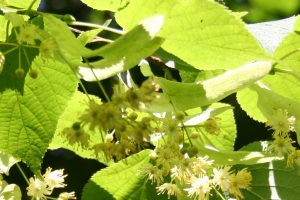
Everything you need to know about the sycamore tree, from identification tips to typical characteristics; how to spot disease and the best way to maintain a sycamore tree.

The sycamore tree is part of the maple family. It is a large, broadleaf deciduous tree which is native to central, eastern and southern Europe. Now prevalent in the UK, its presence here is reckoned to date back to the Middle Ages. It’s a naturalised species here now and it’s the fact it has become such a popular species is down to the way its winged seeds spread and reseed with great ease.

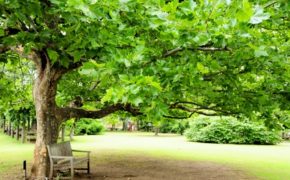
The canopy of the sycamore tree is one of its redeeming features, and it is one of the most popular trees in parks and gardens for those seeking shade from the sun. The tree will grow anything up to 35 metres in height, and has a long lifespan of over 400 years.

Sometimes confused with the field maple tree, the sycamore has a more angular winged seed. Its Latin name, Acer pseudoplatanus, means ‘like a plane tree’.

General Facts

Known as Sycamore
Latin name Acer pseudoplatanus
Location Central, Eastern and Southern Europe
Foliage Deciduous
Lifespan 400 years plus

Characteristics

Height Up to 35 metres
Spread 4-8 metres
Appearance A large deciduous tree with dark pink-grey bark that starts off smooth but cracks and forms small plates as it ages. Twigs are browny-pink and hair free.
Leaves Leaves measure 7-16cm with five distinctive lobes. The stalks of younger trees are distinguished by their red colour. The veins of the leaves are hairy on the underside.
Flowers Sycamore flowers are small in size and yellow-green in colour. They hang in spikes known as ‘racemes’.
Fruit Sycamore flowers are both wind and insect pollinated. After pollination, the female flowers transform into characteristic winged fruits called samaras.
Found in Parks, gardens and avenues

Conditions

Ideal soil Moist but well drained, chalk, clay, loam or sand
Soil pH Neutral, acid, alkaline
Aspect North, south, east or west facing
Exposure Full sun to partial shade; Sheltered or exposed

Threats

Pests Sycamore gall mite, aphids, horse chestnut scale
Diseases Sooty bark, Verticillium wilt, Phytophthora root rot, leaf spot, tar spot

Sycamore Trees and Wildlife

The sycamore is a big pull for aphids, which means ladybirds, hoverflies and birds are also attracted in their droves as they feed on the green flies. Caterpillars of various moths will feed on the leaves. These include the maple prominent, the plumed prominent and the sycamore moth. Bees and other pollen loving insects are magnetised to the flowers, and birds and small mammals regularly feast on the seeds.

Sycamore Tree Symbolism and History

It is not exactly clear when the sycamore tree was introduced to the UK. It may have come to England courtesy of the Romans, although by some accounts it first appeared to be introduced during the Tudor era of the 1500s. By the 1700s it was more widespread, and then by the mid-1800s the earliest reports of its naturalisation came about.

Sycamore trees were used in Wales to craft ‘lovespoons’. When a decoratively carved spoon was presented to a loved one it was considered a token of affection. The tradition dates back to the 1600s but is still alive to this day.

The winged seeds of the sycamore are commonly known as ‘helicopters’ and children across the UK use them to make models and to compete in flying competitions.

The Importance of Sycamore Trees

Sycamore produces strong, hard timber that is pale cream in colour and has an attractive, fine grain. For this reason it is popular in furniture making and widely used as a veneer which is particularly eye-catching when crown cut or figured. Sycamore is also popular for kitchenware making as the wood does not stain or taint the food.

A mature sycamore tree is very wind tolerant which makes it perfect for exposed or coastal areas as a windbreak. Sycamores are also highly tolerant of pollution, which is why they are often used for ornamental purposes around towns and cities and along avenues.

Caring for a Sycamore Tree

Regular pruning of the sycamore tree is essential as it tends to grow into an odd shape with severe angles and drooping branches which sometimes wrap around the tree.

Regular pollarding is good practice in order to maintain a reasonable height, especially for sycamore trees that are growing in public places. Pollarding is also good for keeping the canopy in good shape, although it needs to be done regularly from an early age. Crown reduction is also commonly used in order to let light through and is a good idea in order to reduce the risk of neighbour disputes.

Care must be taken to ensure sycamore tree pruning is carried out at the right time of year so as to avoid disease ingress and it is also important to make sure that no damage is done to the collars of branches by keeping the pruning flush with them. If in doubt at any point, consult a qualified tree surgeon.

For more about sycamore tree pruning, follow this link.

When you are caring for your sycamore tree, you should be on the lookout for sooty bark (cryptostroma corticale). Following continuously hot weather, sooty bark will lead to partial or total crown wilting which can eventually be fatal.

Also look out for Verticillium wilt. This is a fungal disease that penetrates the tree through the roots. It leads to wilting, yellowing leaves and dieback. Another issue is Phytophthora root rot which causes yellow, sparse or wilting foliage together with branch dieback.

Leaf spot and tar spot are also common problems, however these aren’t thought to be too risky. Bark stripping by grey squirrels is another minor issue.

When it comes to pests, have a look for signs of the horse chestnut scale insect which is one of the main concerns, although it doesn’t usually affect sycamore trees unless they have been deprived of nutrients or water. Symptoms to look out for are white circular egg masses partially covered by brown shells on trunks and larger branches. These generally appear in early summer.

If you have detected any of these issues, do not hold back in calling in professional assistance. By the same token, if you want your sycamore tree to retain excellent health and to look as eye catching as possible, the most astute course of action is to seek professional guidance from a suitably qualified tree surgeon.

If you have a sycamore tree that would benefit from expert care and attention, why not contact Tree Works? As fully qualified and highly experienced tree surgeons, we can offer detailed skill and knowledge across all areas of sycamore tree care. For a free, no-obligation quotation, call us on 07781 416 354 or get in touch here.
1 2 3