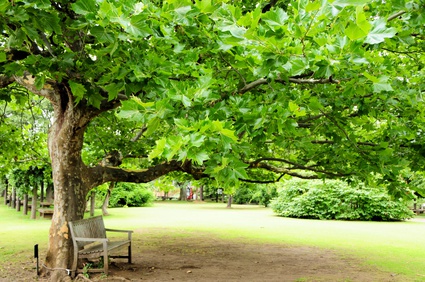
Dogwood Tree


Dogwood is a very attractive plant. Read on to discover how to identify dogwood; what the most common diseases and pests are and the best way to prune and care for your dogwood tree.

Dogwood is a small, deciduous broadleaf shrub. Its bushy appearance makes it popular as a hedgerow and woodland edge plant. It is common in the south of England where it is widely used as an ornamental tree in formal gardens. In autumn, dogwood is particularly attractive.

Cornus sanguinea as it is known scientifically is notable for its diversely coloured twigs. When the sun shines the twigs are crimson, whilst in the shade they appear a lime green shade.

General Facts

Known as Common dogwood, blood twig
Latin name Cornus sanguinea
Location UK native, Europe
Foliage Deciduous
Lifespan 80 years

Characteristics

Height 2.5 metres
Spread 2.5 metres
Appearance A deciduous shrub with a bushy, upright habit. Young shoots are red coloured during the winter. Bark is grey and smooth with shallow ridges. Twigs are smooth, slim and straight.
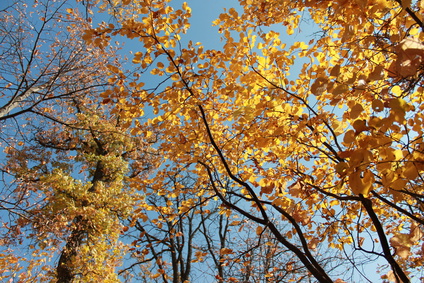
Leaves Leaves are green and oval measuring around 6cm in length. They have smooth sides and notable curving veins. The leaves fade to a rich crimson colour just ahead of falling in autumn.
Flowers Dogwood flowers are small and creamy-white with 4 petals, appearing in clusters.
Fruit Once the flowers are insect pollinated, they transform into small black berries called dogberries.
Found in Ornamental gardens

Conditions

Ideal soil Moist but well drained chalk, clay, sand or loam
Soil pH Acid, alkaline, neutral
Aspect North, south, east or west facing
Exposure Sheltered or exposed

Threats

Pests Horse chestnut scale
Diseases Cornus anthracnose

Dogwood and Wildlife

Moth caterpillars very much enjoy the leaves of the dogwood tree. These include the case-bearer moth. Insects love the flowers and a host of birds and mammals are fans of dogberries.

Dogwood Symbolism and History

The name ‘dogwood’ derives from the smooth, straight twigs which were used to make butchers’ skewers which used to be known as ‘dags’ or ‘dogs’. So the name actually means ‘skewer wood’.

The Importance of Dogwood

Dogwood is an important ornamental plant for gardens, especially formal gardens, and is planted for its eye-catching autumnal colour.

Caring for a Dogwood Tree

Dogwood really can benefit from hard pruning at the right time of year. Its stems will grow back all the more colourful, making winter gardens even more appealing. Dogwood stooling is good practice. It is similar to coppicing and results in the tree growing back vigorously. Providing it is done during late winter to early spring and before the new leaves appear on the stems, you will enjoy maximum time with your gloriously coloured stems.

It is advisable to prune the dogwood just as its new growth starts and before the growing season becomes fully active.

If you want to promote richly coloured stems, you’ll need to wait until the plant is one to two years old. Never hard prune a young dogwood tree.

Dogwood pruning is a very specific process. If you are in any way unsure as to the best way to proceed, your best course of action is to call in the experts. Qualified tree surgeons will know precisely when and how to prune your dogwood for best results and to promote the health of the tree.

For more about Dogwood tree pruning, follow this link.

If you have a dogwood tree that would benefit from a little care and attention from professional experts, talk to Tree Works. As highly qualified and extensively experienced tree surgeons, we can offer in-depth knowhow across all aspects of dogwood tree care. For a free, no-obligation quotation, call us on 07781 416 354 or get in touch here.

Common Box


It’s time to learn more about the common box tree! Here you’ll find tips on how to identify the common box; how to spot typical diseases and pests and the best way to prune and care for your common box. Read on to discover more!

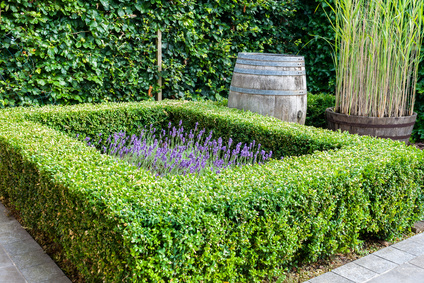
Common box is a large, evergreen UK-native shrub found mainly in the south of England around Box Hill in the county of Surrey and throughout the North Downs, the Cotswolds and the Chilterns. Common box tends to be slow growing but makes for an attractive hedging and topiary plant.

Of the Latin Buxus sempervirens, common box will live for several hundred years and reach heights of 5 metres with regular pruning, or 12 metres if left to grow. The leathery, glossy leaves and small, yellow-green flowers make it particularly attractive.

General Facts

Known as Common box, European box, Abassian boxwood
Latin name Buxus sempervirens
Location UK native, South West Eurasia, North Africa
Foliage Evergreen
Lifespan Several hundred years

Characteristics

Height 5 metres+
Spread 4-8 metres
Appearance A large, slow-growing evergreen shrub with small, leathery leaves. Compact in habitat, the bark is smooth and grey and green, downy stems.
Leaves Leaves are oval measuring 10-25mm in length. Shiny, leathery, waxy and dark green, the leaves are formed on short stalks.
Flowers Male and female flowers appear on the same tree during the months of April and May. Clusters of yellow-green flowers appear on the leaf axils.
Fruit Flowers are wind pollinated. Female flowers transform into green, dry capsules and ripen to brown, woody seed cases.
Found in Hillsides, woodland, scrub, formal gardens, parks

Conditions

Ideal soil Moist but well drained chalk, clay, sand or loam
Soil pH Acid, alkaline, neutral
Aspect North, south, east or west facing
Exposure Sheltered or exposed

Threats

Pests Box sucker, mussel scale, box red spider mite
Diseases Leaf spot, box blight

Common Box and Wildlife

Common box is a haven for bees and also offers a sheltered habitat for mammals, insects and small birds.

Common Box Symbolism and History

Common box was traditionally considered a sombre plant. In some areas, box sprigs were handed to mourners at funerals to thrown onto the coffin.

The Importance of Common Box Trees

Common box timber is used widely in wood engraving being of fine texture and hard. It is also used to make violin pegs and musical instruments.

Hedging and topiary are the main uses for common box and you will often find mazes grown from this plant.

Caring for a Common Box Tree

Common box is pruned regularly to maintain its shape and appeal as a hedging or topiary plant. As a slow growing shrub it doesn’t need too much other than periodical tidying up.

It is however vitally important to carry out any common box pruning at the right time of year. All evergreen shrubs are usually best pruned just ahead of the start of their growth cycle in mid-spring. This will take care of any risk of late frost that can harm new shoots, as well as concealing pruning scars by new growth.

Depending on what you are looking to achieve, you will need to adopt a particular approach when it comes to box pruning. For example, if you want to boost the bushy appearance of your common box, you will need to cut it back by up to a third in early May.

The best approach if you want to be sure to achieve your goals for your common box is to call in qualified professionals. Engage a suitably qualified tree surgeon and you will have complete peace of mind that your common box will be pruned to perfection and maintained in the best of health.

For more about Common box tree pruning, follow this link.

If you have a common box hedge or tree that could do with some expert care and attention, why not contact Tree Works? As highly qualified and long term experienced tree surgeons, we can offer exceptional knowhow across all aspects of common box tree care. For a free, no-obligation quotation, call us on 07781 416 354 or get in touch here.

Blackthorn Tree


How would you like to learn more about the blackthorn tree? Read on for tips on how to identify it and its typical characteristics; how to spot common diseases and pests and the best way to prune and care for blackthorn.

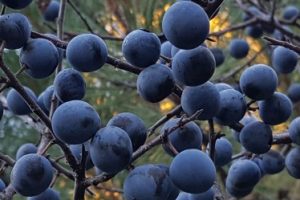
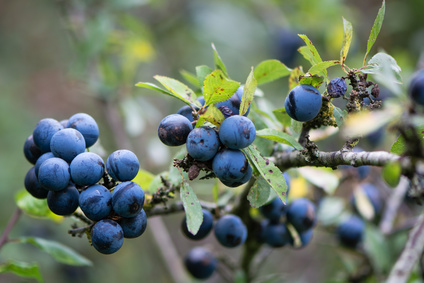
Blackthorn is a deciduous bush-type thorny tree. Well-loved for its glorious spring blossom, this tree is UK native and produces the sloe fruit, often used to make gin and other popular drink and foodstuffs such as wine and preserves. Prunus spinosa as it is known scientifically can grow up to 7 metres in height and will live up to 100 years. Not to be confused with hawthorn, the blackthorn does produce very similar white blossom, but flowers earlier around April and before its leaves appear, whilst hawthorn, or May flower, blooms in May and after its leaves come out.

The bark of the blackthorn is smooth and dark brown. The timber is very tough and used to make riding or walking sticks as well as Irish shillelaghs.

General Facts

Known as Blackthorn, sloe, sloe plum, buckthorn, bullace, skeg, snag
Latin name Prunus spinosa
Location UK native, Europe, Russia, Western Asia
Foliage Deciduous
Lifespan Up to 100 years

Characteristics

Height Up to 7 metres
Spread Up to 4 metres
Appearance A small, thorny deciduous tree displaying beautiful spring blossom and black-purple twigs.
Leaves Leaves are dark green and ovate, slightly wrinkled and toothed, tapered at the base and toothed at the tip.
Flowers Small white flowers appear in clusters on short stalks in early spring before the leaves.
Fruit Flowers are insect pollinated and develop into blue-black fruits called sloes.
Found in Scrub, copses, woodland, roadside hedging

Conditions

Ideal soil Moist but well drained chalk, clay, sand or loam
Soil pH Acid, alkaline, neutral
Aspect North, south, east or west facing
Exposure Sheltered or exposed

Threats

Pests Aphids, caterpillars, bullfinches
Diseases Silver leaf, blossom wilt, Taphrina pruni

Blackthorn Trees and Wildlife

Blackthorn is a rich source of pollen and nectar for bees during the spring with its early flowering blossom. Caterpillars of numerous moths enjoy its green leaves, including the common emerald, the small eggar, the swallow-tailed and yellow-tailed moths and the magpie. The black and brown hairstreak butterflies are also fans.

Birds enjoy nesting in blackthorn thanks to its thorny protection and abundant supply of caterpillars, and its autumn fruits.

Blackthorn Tree Symbolism and History

Blackthorn has long been associated with witchcraft and it is believed that witches’ wands were crafted from blackthorn wood.

The Importance of Blackthorn Trees

Blackthorn wood is tough and hardwearing and traditionally used in the crafting of walking sticks. As it burns well, it is commonly used as firewood.

Blackthorn is a popular hedging shrub and widely used in wildlife gardens as it attracts an array of birds and insects.

Sloes are used in the making of foods and beverages such as gin, wine and preserves.

Caring for a Blackthorn Tree

Not a lot of pruning is needed for the mature blackthorn tree unless you are using it as a hedging shrub, in which case you’re going to need to tidy it up on a regular basis.

The younger blackthorn benefits from regular pruning so that its framework stabilises well and the canopy becomes nice and thick.

It’s important to carry out blackthorn tree pruning at the right time of year so as to ensure its health is maintained. Where issues such as silver leaf have taken hold, it is essential that pruning is only undertaken in mid-summer. Otherwise, the best time to prune a blackthorn tree or hedge is during the winter.

Your best route really is to call in professional help from qualified tree surgeons who know precisely when and how to take care of your blackthorn tree.

For more about Blackthorn tree pruning, follow this link.

If you have a blackthorn tree that requires skilled care and attention, why not talk to Tree Works? As extensively qualified and long term experienced tree surgeons, we can offer in-depth skill and knowledge across all aspects of blackthorn tree care. For a free, no-obligation quotation, call us on 07781 416 354 or get in touch here.

Alder Tree


For all you need to know about the alder tree, including tips on how to identify it and typical characteristics; how to spot common diseases and pests and the best way to take care of an alder tree, read on.

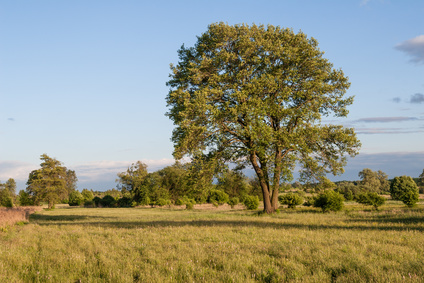
The alder tree is a conical shaped, UK-native deciduous tree. Also known as common alder, black alder and European alder and of the Latin Alnus glutinosa, this tree is known to grow to heights of 25 metres on average, and can live for 60 years.

Alder is connected to Franka alni, a bacteria that grows in the roots of the tree. This is a vital symbiotic relationship; the bacteria absorbs nitrogen from the air and helps the tree absorb it. The tree in return feeds the bacteria with sugars. The soil around the tree is enhanced as a result, with all the surrounding plants enjoying an abundance of nitrogen.

General Facts

Known as Alder, common alder, black alder, European alder
Latin name Alnus glutinosa
Location UK native, Europe, North Africa
Foliage Deciduous
Lifespan Up to 60 years

Characteristics

Height Up to 25 metres
Spread 4-8 metres
Appearance A conical-shaped deciduous tree with noticeable winter catkins and bright green, rounded leaves
Leaves Leaf buds are purple-grey and grow on long stems; the dark green, serrated edge leaves are 3-9cm long and leathery bearing a racket-shape. Leaf tips are pointed and usually indented.
Flowers Catkins appear between February and April. Both male and female flowers appear on the same tree. The male catkins are yellow and long, whilst the female catkins are green and oval shaped and appear in groups of three to eight per stalk.
Fruit Female catkins are wind pollinated and take on the appearance of small, cone-like fruits in the winter which open out to release seeds.
Found in Close to rivers, ponds, lakes, marshes, streams and damp woodland.

Conditions

Ideal soil Moist but well drained or poorly drained chalk, clay or loam
Soil pH Acid, alkaline, neutral
Aspect North, south, east or west facing
Exposure Sheltered or exposed

Threats

Pests Alder sucker, leaf-mining sawflies
Diseases Phytophthora (alder dieback)

Alder Trees and Wildlife

Alder is loved by a number of moth caterpillars such as the pebble hook-tip, the alder kitten and the blue bordered carpet moth. The winter catkins are appreciated by bees for their early nectar and pollen source, and birds such as the goldfinch, redpoll and siskin love the seeds of this tree.

Alder woodland is generally damp, which provides the perfect environment for fungi, lichens and mosses. The chequered skipper and pearl-bordered fritillary butterflies are great fans of alder woodland, as are certain species of crane fly. Otters make nests in alder roots.

Alder Tree Symbolism and History

The damp, sometimes swampy, alder woods were known for their mystifying atmosphere. The green dye that came from the flowers was used to create a camouflage for clothing worn by the likes of Robin Hood and the fairy kingdom. Alder wood turns a deep orange when cut which makes it look as though it is bleeding, hence many people fearing alder trees.

The Importance of Alder Trees

Alder wood has been historically used in boat making and also to create water pipes and sluice gates. Much of Venice in fact is built upon alder piles. This is because the wood is soft and porous and can withstand rot when exposed to underwater conditions.

Clogs were traditionally made from alder wood and legend has it that a few alder leaves placed in one’s shoes ahead of a long journey would keep the feet cool and fend off swelling.

Alder these days is a popular veneer and is also used to make pulp and plywood. It is also commonly used to make charcoal and gunpowder. The trees are widely used to boost the fertility of soil on brownfield sites and former industry wasteland, and are a real boon when it comes to mitigating floods.

Caring for an Alder Tree

Minimal pruning is acceptable for a mature alder tree, although younger specimens do benefit from formative pruning to promote a good shape. Regular thinning to promote air flow and light penetration is good practice so that the health of the tree is boosted.

It is important to get the timing and methods right when it comes to alder tree pruning. The best approach is to engage the services of a qualified tree surgeon. With the experience and skill they have built up over their years of operating, they will be able to provide a tailored pruning programme as well as advice on keeping the tree healthy and free from pests and disease.

For more about Alder tree pruning, follow this link.

If you have an alder tree that needs professional care and attention, why not get in touch with Tree Works? As fully qualified and extensively experienced tree surgeons, we are able to offer detailed skill and knowledge across all aspects of alder tree care. For a free, no-obligation quotation, call us on 07781 416 354 or get in touch here.

Aspen Tree


Everything you need to know about the aspen tree, starting with tips on how to identify it through to typical characteristics; how to spot typical disease and pests and the best way to maintain a rowan tree.

The aspen tree is a fast-growing UK native deciduous tree which grows abundantly throughout Europe, Africa and Asia.

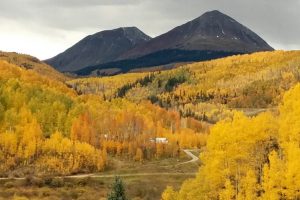
Aspen is a particularly striking, eye-catching tree with leaves that shimmer and appear to ‘tremble’ in the breeze due to their flat stems. Its Latin name, Populus tremula, literally translated means ‘trembling poplar’ and the tree is also known as the ‘quaking aspen’.

This tree grows commonly in parks and gardens and is a popular woodland specimen where it is a valuable habitat for wildlife and insects including the endangered Aspen Hoverfly.

General Facts

Known as Aspen
Latin name Populus tremula
Location UK native, Europe; Africa; Asia
Foliage Deciduous
Lifespan Up to 150 years

Characteristics

Height Up to 25 metres
Spread More than 8 metres
Appearance A large deciduous tree with a broad crown. When mature, the trunk often becomes covered in lichen and the higher branches tend to bow horizontally.
Leaves In autumn, aspen leaves turn from their springtime bronze hue into a rich, golden yellow. Leaves are rounded and appear to tremble in the breeze.
Flowers Male aspen trees bear woolly grey catkins and female trees bear green catkins.
Fruit Female catkins ripen to release small, fluffy seeds during the summer.
Found in Parks, gardens and ancient woodland and heathland

Conditions

Ideal soil Moist but well drained chalk, clay, sand or loam
Soil pH Acid, alkaline, neutral
Aspect North, south, east or west facing
Exposure Full sun (shade intolerant); sheltered or exposed

Threats

Pests Leaf beetles, sawflies, caterpillars
Diseases Bacterial canker, leaf rust, poplar scab, honey fungus, silver leaf disease

Aspen Trees and Wildlife

The aspen hoverfly and gall midges are attracted to dead aspen wood. In turn, these insects a healthy diet for birds and ladybirds. Birds such as the woodpecker nest in deadwood cavities and beavers are particularly partial to the aspen.

Aspen Tree Symbolism and History

The Greek name for aspen, Aspis, means ‘shield’ which was one of the various traditional uses of its timber. It is said that an aspen leaf crown will give the wearer the power to visit and return safely from the underworld.

The Importance of Aspen Trees

Aspen wood being naturally lightweight is commonly used to make paddles, oars and surgical splints.

Caring for an Aspen Tree

The aspen tree benefits from regular shaping to maintain its appearance. It is also important to remove damaged, diseased, congested or crossing shoots in order to keep the tree healthy and again, boost its appearance. Shaping is best carried out during the winter whilst the tree is in its dormant phase, otherwise sap bleeding can lead to disease. Dangerous branches can be removed at any time of year.

Because the aspen tree produces suckers fairly vigorously which are prone to growing into new plants which then compete with the main tree for water, nutrients and light, it is important to ensure these are removed. This should be done in such a way that the regrowth is reduced. Suckers left to grow out of control can result in the tree having to be cut down. Sucker removal is best done during the late autumn or winter.

Always engage a qualified tree surgeon. They will provide you with tailored pruning advice based on your individual tree, its condition and its surroundings.

For more about Aspen tree pruning, follow this link.

If you have an aspen tree that needs expert care and attention, why not contact Tree Works? As fully qualified and highly experienced tree surgeons, we can offer detailed skill and knowledge across all aspects of aspen tree care. For a free, no-obligation quotation, call us on 07781 416 354 or get in touch here.

Rowan Tree


All you need to know about the rowan tree, from tips on how to identify it, to typical characteristics; how to spot common diseases and pests and the best way to maintain a rowan tree.

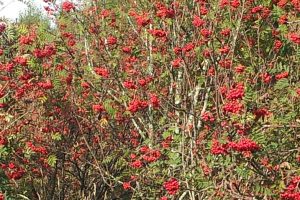
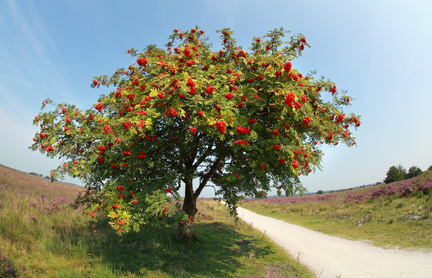
The rowan tree is a UK native species. Also known as the mountain ash because it is able to survive high altitudes, and also because its pinnate leaves are very similar to those of the common ash, this tree is well known for its stunning white spring flowers followed by striking bursts of bright red berries in late summer to early autumn. It’s a deciduous tree known to grow up to 15 metres in height and to live up to 200 years.

The rowan tree has a few other alternative names including witch wiggin, keirn and cuirn.

Witch wiggin as a name derives from the fact the rowan tree used to be planted by homeowners to protect against witches. In Ireland it was grown specifically to ward off evil spirits, and in Wales the rowan tree would regularly be seen in churchyards. In Scotland, it was forbidden to fell a rowan tree.

General Facts

Known as Rowan
Latin name Sorbus aucuparia
Location UK native, Europe; Asia
Foliage Deciduous
Lifespan Up to 200 years

Characteristics

Height Up to 15 metres
Spread 4-8 metres
Appearance An upright deciduous tree with silvery-grey, smooth bark and purple, hairy leaf buds.
Leaves Leaves are pinnate and turn from green to yellow in autumn. There are 5-8 pairs of long, oval serrated leaflets together with one terminal leaflet at the end.
Flowers Rowan flowers appear in dense clusters with each presenting five creamy white petals.
Fruit Rowan fruits are prominent, scarlet berries that appear in late summer to early autumn.
Found in Streets and gardens

Conditions

Ideal soil Well drained loam or sand
Soil pH Neutral, acid
Aspect North, south, east or west facing
Exposure Full sun to partial shade; Sheltered or exposed

Threats

Pests Aphids, blister mites, sawflies
Diseases Fireblight, silver leaf disease

Rowan Trees and Wildlife

Moth caterpillars are particularly partial to rowan leaves, especially the autumn green carpet moth and the Welsh wave moth. Apple fruit moth caterpillars enjoy rowan berries, as do numerous birds including the blackbird, the mistle and song thrush, the redstart, redwing, waxwing and fieldfare. The flowers of the tree are rich in pollen and nectar, so attractive to bees and other pollinating insects.

Rowan Tree Symbolism and History

Years ago, rowan trees were often planted by householders to protect against witches. The bright scarlet red berries were considered effective in fighting evil, which is why this tree has long been associated with witches and magic. The Celtic name for the rowan tree is ‘fid na ndruad’, meaning ‘wizards’ tree’. People would often use rowan wood to stir milk to prevent it curdling, and it was also used to make divining rods.

The Importance of Rowan Trees

The pale, yellowy-brown wood of the rowan tree with its distinctive deep-brown heartwood is sometimes used in furniture making, wood-crafting and engraving. The rowan tree is a popular street tree, and its berries are edible and rich in vitamin C, sometimes used to make savoury jellies as meat accompaniments.

Caring for a Rowan Tree

Because the fruit of the rowan tree grows in abundance, it will often weigh heavy on the branches. This makes it essential to carry out regular rowan tree pruning so that there is a robust framework to support the fruit. Otherwise branches are likely to break off, presenting hazards and posing a risk to the health of the tree.

Regular pruning will promote good health by allowing air and sunlight to penetrate as well as letting wind to pass through without barriers, so preventing storm damage. It’s also good to remove crossing or damaged branches so that a clear trunk is left.

Never prune a rowan tree during the growing season because the sap will attract bugs and diseases. Autumn to early winter is considered the most appropriate time for rowan tree pruning, although any time of year is acceptable for dead wood removal.

For more about Rowan tree pruning, follow this link.

If you have a rowan tree that would benefit from expert care and attention, why not get in touch with Tree Works? As fully qualified and highly experienced tree surgeons, we can offer detailed skill and knowledge across all areas of rowan tree care. For a free, no-obligation quotation, call us on 07781 416 354 or get in touch here.

Ash Tree


Everything you need to know about the ash tree, from identification tips to typical characteristics; a step by step lifespan; how to prevent disease and the best methods of ash tree care.

The ash tree is a native UK species of tree that is often used for ornamental bordering thanks to its tendency to grow in groups, and its attractive leaves and highly elegant, graceful appearance. It is Britain’s third most common tree and pretty much dominates UK woodland.

General Facts

Known as Ash, common ash, European ash
Latin name Fraxinus excelsior
Location UK, Europe, Asia Minor, Africa
Foliage Deciduous
Lifespan Average 100-150 years but can live for 400 years+ with regular coppicing

Characteristics

Height Average 35 metres
Spread At least 8 metres
Appearance Pale grey to beige-grey bark working from smooth into fissures as the tree matures. Smooth twigs with black, velvety leaf buds in the winter.
Leaves Pinnate (feather-like) leaves with around 3-6 pairs of pale green, oval leaflets and long tips measuring up to 400mm, plus a singular terminal leaflet at the end. Leaves are able to turn towards the sunlight and some trees display a leaning of the canopy towards the sun. Leaves fall whilst still green.
Flowers Small, purple flowers bloom before the first leaves of spring appear. They grow in spiked clusters at the tips of the twigs and are unscented.
Fruit Once pollinated, the female flowers transform into winged green fruits that resemble keys. This occurs in late summer and autumn. In the winter and early spring the fruits turn brown and fall to the ground, providing food for passing birds and other wildlife or planting into the ground to form seedlings.

Conditions

Ideal soil Ash trees endure most soils except excessively sandy. They prefer soil that is moist but well-drained and have an overall preference for chalky or rich soils
Soil pH Alkaline, neutral
Aspect North, south, east or west facing
Exposure Full sun

Threats

Pests Emerald Ash wood-boring beetle
Diseases Ash dieback (Chalara Dieback of Ash) is a lethal and highly prevalent fungal disease presenting a significant threat to the woodland of the UK as well as trees growing in parks and gardens. The disease causes ash trees to shed their leaves and usually leads to their death.

How to Identify the Ash Tree

Buds: Sooty black with a prominent larger bud at the end of each shoot. Shoots are grey in colour. This is probably the most obvious feature of the ash tree and the best method of identifying it during the winter when there are no leaves present.

Leaves: Leaves are compound, in other words, made up of numerous leaflets. Leaflets are in pairs along opposite sides of the stem with the exception of the terminal leaflet at the end. There are usually 3-6 pairs and each leaflet is serrated in an irregular pattern, rounding at the base but pointed at the end. The leaves of the common ash are a vibrant green colour on top and lighter in shade underneath. Leaves don’t tend to appear until late spring and will be the last to fall in the autumn, mostly whilst still green but in some cases turning golden yellow beforehand.

Bark: The young ash displays smooth bark of a grey colour similar to its twigs. As the tree ages, so the bark lightens in shade to beige-grey, but maintains a fairly smooth appearance until the tree comes of age. Eventually the bark will start to display fissures and once it reaches full maturity these will become quite pronounced and the bark dark grey in colour, appearing more like a mature English oak.

Flowers: Ash tree flowers are small and purple in colour. They emerge in clusters during the spring before the first leaves appear and have no scent. Male and female flowers grow on different trees although there are sometimes instances of male and female flowers on the same tree but on different branches.

Seeds: Once the flowers perish and have been pollinated, seeds form in clusters. These are more noticeable than the flowers and look like winged keys, a bit like sycamore seeds, although with just a single wing. The keys start out green but by autumn they will be brown and will usually remain on the tree after the leaves have been shed. This is one of the easiest ways to identify an ash tree in the winter.

The Lifespan of an Ash Tree

Seed: The ash tree starts life as a single seeded winged key which becomes airborne and, if not consumed by passing wildlife once it falls, plants into the ground and begins to germinate.

Sapling: The seedling becomes a sapling after around a year’s worth of growth. Branches start forming in opposite pairs during the sapling’s development, with budding on opposite sides. The young ash sapling is known for its resilience against atmospheric pollution and high winds.

Young tree: The young ash tree grows fast in full sunlight and displays a smooth, grey coloured bark that gradually starts to take on a beige-grey tone and slightly fissured appearance as the years pass.

Adult: By the time the ash tree reaches 60 years of age or thereabouts, depending on environmental factors, it will usually have reached its maximum height and can be considered in its adult years. By 150 years of age the ash tree is thought of as in old age, although if it has been regularly coppiced (cut back to ground level to stimulate growth) then it could well see the grand old age of 400 years.

Ash Trees and Wildlife

Ash trees are very inviting when it comes to wildlife and plant life. Wildflowers like dog’s mercury, dog violet and wild garlic are typical neighbours for the ash tree, enjoying its sun drenched woodland floor and themselves attracting a range of insects including rare butterflies.

The winged key seeds are favourites for bullfinches and owls, and woodpeckers enjoy nesting in the ash tree. Dormice also choose the ash tree above other species because they appreciate the conditions offered by the hazel understory which often accompanies it.

Ash tree leaves are a diet staple for caterpillars and all sorts of moth species including the privet hawk-moth, the coronet, the brick and the centre-barred sallow moth.

Ash Tree Symbolism

The ash tree was referred to as the ‘Tree of Life’ in Viking mythology and is still regarded today in Britain as a healing tree. Throughout history the ash was thought to have mystical and medicinal properties.

The Importance of Ash Trees

Ash timber is incredibly important in the tool making industry as well as in sporting circles, regularly used to make sport handles, hockey sticks, oars, hammers, spades and axe handles. Ash is also a very popular timber in furniture making and as it does well when coppiced, it is also widely used as firewood and charcoal.

Caring for an Ash Tree

Ash tree pruning is essential to assist healthy growth, but it is vital that the correct pruning methods are employed otherwise there is a risk of inflicting serious damage on the tree. Proper pruning early in the tree’s life will lead to a reduced need for care once the tree reaches maturity.

The best methods of tree pruning for the ash tree are crown reduction, crown lifting and crown thinning. These will promote airflow and sunlight penetration which will help to keep the tree healthy. Ash tree coppicing, that is cutting back from the base of the tree, will also encourage growth and will often lead to the tree living a much longer life.

In addition, regular removal of diseased, broken or dead branches will keep the tree at its optimum and pruning will also help to prevent pests and other elements that can cause decay from infecting the tree as a whole.

It is important to be aware that pruning slackens growth whilst instigating bud development and that this is crucial for the healthy development of the tree. If entire limbs are removed for any reason other than being dead or diseased, the tree could experience lasting damage.

The best advice is to use a qualified tree surgeon to undertake the work in the name of preserving the health of the tree and promoting its growth.

If you have an ash tree on your land that needs expert tree care, why not talk to Tree Works? As fully qualified and highly experienced tree surgeons, we are able to offer extensive knowhow on all aspects of ash tree care. For a free, no-obligation quotation, give us a call on 07781 416 354 or get in touch here.

Oak Tree


Everything you need to know about the mighty English oak tree, from identification tips to typical characteristics; a step by step lifespan; how to prevent disease and the best methods of oak tree care.

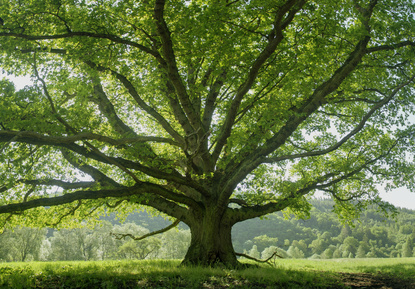
The mighty English oak is feasibly the best known and most admired British native tree. It is certainly the most common tree species in the United Kingdom, particularly across the central and southern deciduous woodlands.

General Facts

Known as English oak, common oak
Latin name Quercus robur
Location UK, Europe, South West Asia
Foliage Deciduous
Lifespan 1,000 years+, average 150-250 years

Characteristics

Height Average 20 metres but can grow up to 40-45 metres
Spread At least 8 metres but the width can often grow to match the height
Appearance Sprawling, twisted branches and rough, ridged bark
Leaves Grow in bunches; display 5-6 deep lobes with smooth edges and very short stems. Bright green in spring, deep green summer to early autumn turning to yellow, golden then deep rust coloured in autumn.
Flowers Long-hanging yellow pollen-producing catkins
Fruit Acorns appear in summer growing from long stalks held tightly by a cup-shaped base, transitioning from green to brown before falling to the ground in early autumn to either take root and germinate or provide food for wild animals and birds.

Conditions

Ideal soil Chalk, clay, loam, sand – oaks are lime tolerant and prefer fertile, deep soil that is moist but well-drained
Soil pH Alkaline, neutral, acid
Aspect North, south, east or west facing
Exposure Full sun or partial shade

Threats

Pests Oak gall wasps, leaf-mining moths, caterpillars, aphids
Diseases Oak Decline including Acute Oak Decline and Chronic Oak Decline; powdery mildew

How to Identify the English Oak Tree Through the Seasons

Spring: Bright green leaves begin to emerge in late April together with yellow hanging catkin-style flowers. The distinctive twisting limbs can still be seen through the new leaf growth.

Summer: A full canopy of rich green leaves forms a majestic portrait. The canopy is at its fullest and small clusters of acorns are starting to appear

.

Autumn: Leaves start turning yellow in early autumn as the acorns fall to the ground. Gradually the leaves transform through a mini kaleidoscope of colour, from yellow to golden, rust to dark rust and finally, golden brown.

Winter: The leaves have finished falling and the branches are bare. It can be tricky at this time of year to identify a tree generally; however the oak gives it away with its expansive, weighty branches that wind and coil and its knobbly ridged, rough bark.

The Lifespan of an Oak Tree

Acorn: The oak tree starts life as an acorn. Each acorn carries a single seed and when that germinates, a taproot is produced. This taproot will act as an anchor for the tree, and will stay with the tree throughout its life.

Seedling: In the spring, the seed produces a shoot which will go on to grow leaves to pull in energy from the sun to support growth.

Sapling: Once the seedling has been growing for a year or so it becomes a sapling which will continue growing, providing it does not become food for passing herbivorous wildlife and that it gets enough sunlight and water.

Young tree: During the first 100 years of its life, an oak tree is considered young. It will start to produce a full crop of acorns at around the age of 40-50 years, by which time it will usually have reached its ultimate height, although it will continue to grow into adulthood.

Adult: By 100 years old the oak tree will reach adulthood and will be producing large crops of acorns, achieving peak production at around 80-120 years at which point its growth starts to gradually decline. During its lifetime, an oak tree will produce in the region of 10 million acorns which have the potential to grow into a new generation of oak trees. An adult oak tree will continue to grow to around 45 metres in height.

Old Age: After 700 years the oak tree has reached old age and will be producing few acorns and growing at a much reduced rate. By 1,000 years of age the tree will start to die.

Oak Trees and Wildlife

The English oak is of key importance to the UK’s wildlife, supporting more life forms than any other tree native to the United Kingdom. British birds enjoy the rich supply of hundreds of species of insect and the shed acorns provide important sustenance for the likes of badgers and deer.

Once the fallen leaves of the oak tree start to decompose, they form a rich mould that supports a range of insects and beetles. Birds find refuge in the nooks and crannies of the oak tree’s bark, whilst numerous species of British bat will roost under loose bark or in holes made by woodpeckers whilst enjoying a feast on the generous supply of insects which have made their home in the expansive canopy.

Oak Tree Symbolism

Thanks to its long lifespan, the oak tree has for hundreds of years been considered a national symbol of strength and survival and has over the years played an important role in English culture. The Christmas Yule Log was traditionally cut from the oak tree; ancient kings would adorn themselves with oak leaf crowns and a host of organisations worldwide use the oak leaf as a key emblem denoting environmental harmony, including the likes of the Woodland Trust.

Caring for an Oak Tree

Oak trees benefit from regular pruning during their younger years. Young oaks will develop a strong central leading branch when regularly pruned, and will usually experience a growth burst after pruning, providing it is done at the right time. Formative pruning is a specialist process which should only be carried out by experts who are trained to understand the biology of the tree and how it should be cared for at the various stages of its early growth.

Mature oak trees should be regularly pruned to remove dead wood and broken branches. This again is a specialist job requiring experience in working at height and of using fit-for-purpose cutting tools capable of dealing with the thick, expansive branches typical of an oak tree.

It is important to bear in mind that pruning slows growth whilst instigating bud development, vital for the healthy development of the tree. If entire limbs are removed for any reason other than being dead or diseased and therefore posing a risk, the tree could suffer damage due to its interior being exposed to the sun: another reason why specialist attention is vital.

Furthermore, due to the risk of Oak Decline, it is vital that oak tree pruning is carried out at the right time of the year. Again a qualified, experience expert tree surgeon will be able to advise on this. Further information on pruning an oak tree.

If you have an oak tree on your land that needs expert tree care, why not talk to Tree Works? As fully qualified and highly experienced tree surgeons, we are able to offer extensive knowhow on all aspects of oak tree care. For a free, no-obligation quotation, give us a call on 07781 416 354 or get in touch here.
Pear Tree


Everything you need to know about the pear tree, from identification tips to typical characteristics; a guide to the different common pear varieties; how to spot disease and the best methods of pear tree care.

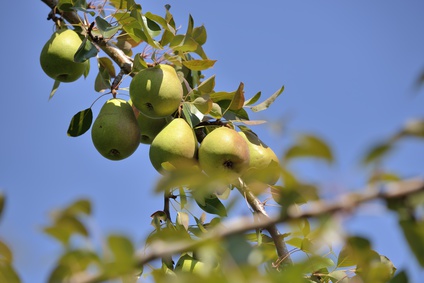
The pear tree is common in the United Kingdom but is not a native species, coming from western, central and southern Europe. There are numerous different varieties of pear tree, the most prevalent in the UK being the common pear.

Pear is a hardy tree that grows easily from seed and discarded cores.

General Facts

Known as Pear, domestic pear, common pear, European pear
Latin name Pyrus communis
Location Western, central and southern Europe
Foliage Deciduous
Lifespan Depends on variety and geography – wild pear 50+ years, cultivated 12-20 years

Characteristics

Height 4-12 metres depending on variety
Spread 4-8 metres
Appearance Domed crown, spiny twigs, grey-brown bark broken into distinctive small squares
Leaves Alternating oval, pointed leaves bearing toothed edges and long stalks. Light green in spring, transforming through gold then black in autumn.
Flowers White scented clusters appear in spring
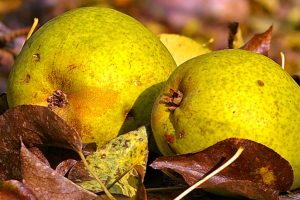
Fruit Edible fruit grows from long stalks ripening to green, yellow or brown depending on the variety. Fruits start life as a narrow cylinder, later broadening to create the distinctive pear shape. The fruit of the domestic pear tree is characteristically juicy, unlike that of the Plymouth pear, a rare species found only in Plymouth and Truro in Devon. Plymouth pear fruit is brown and woody.
Found in Gardens, orchards, hedges, woodland margins, railway banks, waste ground

Conditions

Ideal soil Pear trees prefer moist but well-drained sand, clay, loam or chalk soil depending on the variety
Soil pH Alkaline, neutral, acid
Aspect South or west facing
Exposure Sheltered

Threats

Pests Caterpillars, aphids, pear blister mite, pear midge, codling moth, pear and cherry slugworm
Diseases Apple canker, brown rot, blossom wilt, honey fungus, pear scab, pear rust, fireblight

A Selection of the Different Varieties of Common Pear Tree

Beech Hill: Beech Hill bears dark green, glossy leaves that transform through striking shades of orange and red in the autumn. Produces clusters of sweet smelling white flowers in mid-spring ahead of large crops of small, round, edible fruit measuring up to 5cm in width.

Beth: A bushy tree that produces a small, yellow-green, sweet-tasting, juicy fruit with a smooth texture used as a dessert pear. Tree grows to 2.5 to 8 metres and produces white flowers in spring.

Comice: Also known as ‘Doyenné du Comice’, this is another dessert pear-bearing tree. Moderate crops produce a very juicy, very richly perfumed fruit with a buttery taste and soft, melting texture.

Conference: The most common pear variety grown commercially, Conference makes the perfect dessert pear thanks to its sweet flavour and soft texture. The tree grows from 2.5 to 8 metres in height. Its spring flowers are white and the fruits are green.

Concorde: The Concorde pear tree is easier to grow than the Comice, but its fruit tastes similar with plenty of juice and a light crispness. After its white flowers have seeded, it produces a small, green dessert pear and grows up to 2.5 to 8 metres tall.

Jargonelle: Jargonelle is one of the oldest pear trees in cultivation. It is one of the longest living varieties and very hardy. Its medium sized yellow-green fruit are juicy and tender and are denoted by a red-russet flush.

Onward: Known for its rich, buttery, sweet fruit, much like the Comice, the Onward variety produces strong, regular crops.

Worcester Black: The Worcester Black originated in Worcestershire in the 16th Century. Fruits are culinary pears with dark-skin and pale yellow, gritty flesh. Spring flowers are white and the tree puts up good resistance to disease.

Pear Trees and Wildlife

The flowers of the pear tree are of great interest to the bee, providing a rich food source. Birds such as blackbird and thrush enjoy the fruits, whilst caterpillars consider the foliage of the pear tree a homely habitat that offers food and shelter, aiding them through their transition into butterflies and moths.

Pear Tree Symbolism

Possibly the most well-known reference to the pear tree is in the Christmas ditty, the Twelve Days of Christmas, in which a partridge in a pear tree was gifted by the singer’s true love on the first day of the festive season. Only the English version of this song carries the pear tree reference. The Chinese consider the pear tree a symbol of immortality due to its ability to live, in some environments, to the ripe old age of 250 years.

The Importance of Pear Trees

Pear trees are cultivated to produce the well-known fruits that are enjoyed by so many worldwide as they are eaten fresh, and in tasty desserts. The fruit is also used to produce pear cider, or ‘perry’.

Pearwood is commonly used to craft woodwind instruments and is perfect for wood carving as it resists warping and splintering. Its hardiness also means it is regularly used to make kitchen utensils and wooden spoons.

Caring for a Pear Tree

Pear tree pruning boosts the growth of branches and foliage over the two years that follow. It also slows the production of fruit during that time, allowing the tree to use its energy reserves to grow strong and healthy, making it possible produce much enhanced fruit crops in later years.

Pear tree pruning also improves the structure and shape of the tree, making it both more attractive in appearance and able to support large fruit crops.

The more a pear tree is pruned, the stronger it will grow, providing the tree is healthy. However, it is important to bear in mind that over-pruning will lead to the tree producing vigorous ‘watershoots’ which can overcrowd the crown of the tree. This could lead to disease due to a lack of airflow around the central leader. It is also of great importance to prune a pear tree at the right time of year so as to encourage rapid growth and to avoid the risk of disease.

The wisest advice is to engage the services of a qualified tree surgeon to help you care for your pear tree. That way you can be sure it will receive the attention it deserves and will thrive for many years to come, producing delicious tasty fruit and providing great aesthetic pleasure.

If you have a pear tree on your land that needs expert tree care, why not talk to Tree Works? As fully qualified and highly experienced tree surgeons, we are able to offer exceptional knowledge on all aspects of pear tree care. For a free, no-obligation quotation, give us a call on 07781 416 354 or get in touch here.
Plum Tree


Everything you need to know about the plum tree, from identification tips to typical characteristics; a guide to the different common plum varieties; how to spot disease and the best methods of plum tree care.

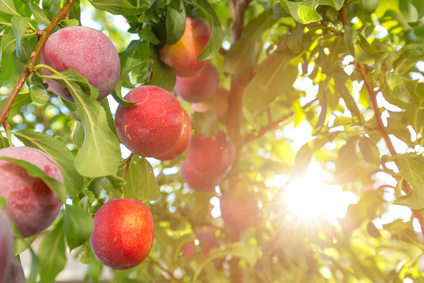
The plum tree is part of the same family that produces damsons and greengages. It presents many varieties that cross pollinate to bear fruits ranging in colour and flavour. Plum trees are not native to the United Kingdom but are still common in this country with their tasty fruits traditionally used to make jam and fruity wine as well as being eaten fresh, and dried as prunes.

General Facts

Known as Plum
Latin name Prunus domestica
Location Europe, United States, Asia
Foliage Deciduous
Lifespan Depends on variety and geography – usually 20-30 years on average

Characteristics

Height 2.5 – 4 metres
Spread 2.5 – 4 metres
Appearance Bark is dark brown; branches grow straight with spiny twigs. Sometimes takes on the appearance of a tree, or alternatively a shrub.
Leaves Variable shape depending on the variety but generally teardrop shaped or oval with a short point at the top. Smooth on top, often downy underneath and small teeth around the margins. Stems are hairy and sometimes display two yellow-green glands.
Flowers White clusters of flowers appear as the leaves start to come through
Fruit Edible fruit is smooth and oval shaped. Depending on the variety it will be red, yellow, green, blue or purple. Contains a single rough stone.
Found in Gardens, hedges, scrub, wasteland, woodland margins

Conditions

Ideal soil Plum trees prefer moist but well-drained sand or loam soil
Soil pH Neutral, acid
Aspect South or west facing
Exposure Sheltered

Threats

Pests Plum moth, plum aphids, brown scale
Diseases Silver leaf disease, bacterial canker, honey fungus, pocket plum

A Selection of the Different Varieties of Domestic Plum Tree

Ariel: Originating from Sweden, this tree produces a red, mottled fruit; round to oval in shape and exceptional in flavour. The tree is very susceptible to canker, and the fruit to splitting, but the sweet taste makes the fruit a real treat to eat fresh.

Avalon: A fairly good resistor to disease, the Avalon plum tree produces an oval or round dark purple-red fruit with a deep yellow flesh that is sweet to taste and soft and juicy in texture. Originates from the UK.

Belle de Louvain: This tree was introduced in 1845 and originates from Belgium. It produces long, oval blue-black fruits with a sweet taste, commonly used in cooking as well as eaten fresh. The tree’s resistance to disease is good and it can tolerate cold winters.

Blue Tit: The Blue Tit plum tree originates from Bedford and is known for producing fruits with a sharp-sweet flavour. Fruits are oval or round with a very good quality of flavour, often used in cooking as well as eaten fresh.

Castleton: This plum tree variety comes from New York and was introduced in 1993. Its fruit has a sharp-sweet taste with good flavour quality for eating fresh.

Czar: The Czar plum tree originated in the United Kingdom and was introduced in 1874. It produces a distinctive purple fruit which is used in cooking as well as eaten fresh. The tree itself is very eye-catching, bearing attractive blossom and bright, colourful fruits. It will tolerate cold winters and the blossom has good resistance to frost.

Kirke’s: Produces a late season dessert plum displaying blue-black skin. The flesh is juicy and sweet with a yellow-green appearance.

Pershore: Originating from Pershore in Worcestershire, this tree produces a long and oval yellow plum, often used for bottling and cooking. Flowers are white and the tree will reach its ultimate height within 5 to 10 years.

President: Introduced in 1901 and originating in Hertfordshire, the President plum tree produces a vibrant purple fruit with a sharp-sweet flavour of good quality, commonly used in cooking and eaten fresh. The tree shows some susceptibility to canker but fair resistance to brown rot.

Plum Trees and Wildlife

Butterflies and moths feed on the plum fruit and the tree’s flowers attract numerous pollinating insects. Mammals and birds are also fans of the fruits which provide an excellent food source.

Plum Tree Symbolism

The plum tree is associated with the vitality of life and endurance thanks to its late production of fruit. In Chinese culture, the plum is of significant importance where the blossom of the tree is considered a symbol of strength and a ‘friend of winter’.

The Importance of Plum Trees

The fruit of the plum tree is used extensively to create preserves, jams and alcoholic beverages and plums themselves are eaten fresh and regularly used in cooking.

Plum wood is sometimes used to make musical instruments but because the trees are generally small, it is not widely available.

Caring for a Plum Tree

It is important to train a plum tree during its early, formative years, and to pay regular attention to dead-wooding as it gets older. This will ensure plentiful crops of fruit thanks to a strong and healthy structure.

With good pruning over the course of several years, an ageing plum tree can be rebalanced and brought back to a picture of glory and then go on to produce good crops of fruit.

Because plum trees are known for producing large crops of fruit, it is common for the branches to experience a good deal of strain which can lead to breakage. Regular thinning is therefore essential to prevent damage to the tree and to keep it safe.

There are four main methods used to prune a plum tree, some of which are quite involved and do require a certain amount of knowledge.

Plum tree pruning is a skilled craft, particularly if you wish to enjoy abundant crops of healthy fruit and keep the tree looking beautiful throughout the year. For the best results, you should engage the services of a qualified tree surgeon. They will also be able to spot the signs of disease and pest infestation, which the plum tree can be particularly prone to. Spotting things like this early will give your plum tree the very best chance of survival.

If you have a plum tree on your land that needs expert care, why not talk to Tree Works? As fully qualified and highly experienced tree surgeons, we can offer extensive knowledge on all aspects of plum tree care. For a free, no-obligation quotation, give us a call on 07781 416 354 or get in touch here.
1 2 3